
What happens when everyone looks at the obvious — and nobody looks at the network
The hotel had a problem. Staff were wearing Vocera communication badges — those small, voice-controlled devices that let a housekeeper say "Call front desk" or a security officer say "Broadcast to all security" without touching a phone. The system had worked before. Now it didn't. Not fully.
Vocera support had been involved. The network team had looked at it. Months passed. Everyone agreed something was wrong. Nobody could find it.
Then I got called in.
First: what are Vocera badges, and why do luxury hotels use them?
If you haven't seen them, Vocera badges are small wearable devices — lighter than a mobile phone — that clip to a uniform or hang on a lanyard. They run on your hotel's Wi-Fi network and are entirely voice-controlled.
A member of staff says a name, a role, or a team, and connects instantly. No dialling. No looking up extensions. No pulling a radio out of a pocket.
For luxury hotels in particular, they're popular because they're discreet. A housekeeper can communicate with the floor supervisor without a bulky radio crackling in a corridor. Security can coordinate without speaking openly into a walkie-talkie in front of guests. F&B teams can respond to a room service request the moment it's placed.
When they work, they're invisible — which is exactly what luxury hospitality demands.
When they don't work, the whole coordination layer of the hotel quietly starts to break down.
The symptom that told me everything
The first thing I did when I arrived was not reboot anything. I asked a simple question:
"Can staff make one-to-one calls between badges? And can they broadcast to a group?"
The answer was immediate: one-to-one calls — fine. Group broadcasts — silent.
To most people, this sounds like a minor distinction. To me, it was the entire answer.
Here's why.
Two types of messages — and why only one was broken
When a Vocera badge makes a call to another badge, it sends a message directly — one device to one device. Think of it like a private phone call. The message has a single destination and travels a straightforward path across the network.
When a badge broadcasts to a group — "Broadcast to housekeeping," — something fundamentally different happens. Instead of a one-to-one message, the system needs to deliver the same audio to multiple devices at the same time. It does this using a method called multicast — essentially a single transmission that the network distributes to all subscribed devices simultaneously, like a PA announcement.
The private calls worked perfectly. That told me the badges were fine. The Wi-Fi was fine. The Vocera server was fine. The entire system was functioning — for one type of message.
The broadcasts were silent. That told me the problem was specifically in how the hotel's network handled group messages.
The invisible setting nobody had checked
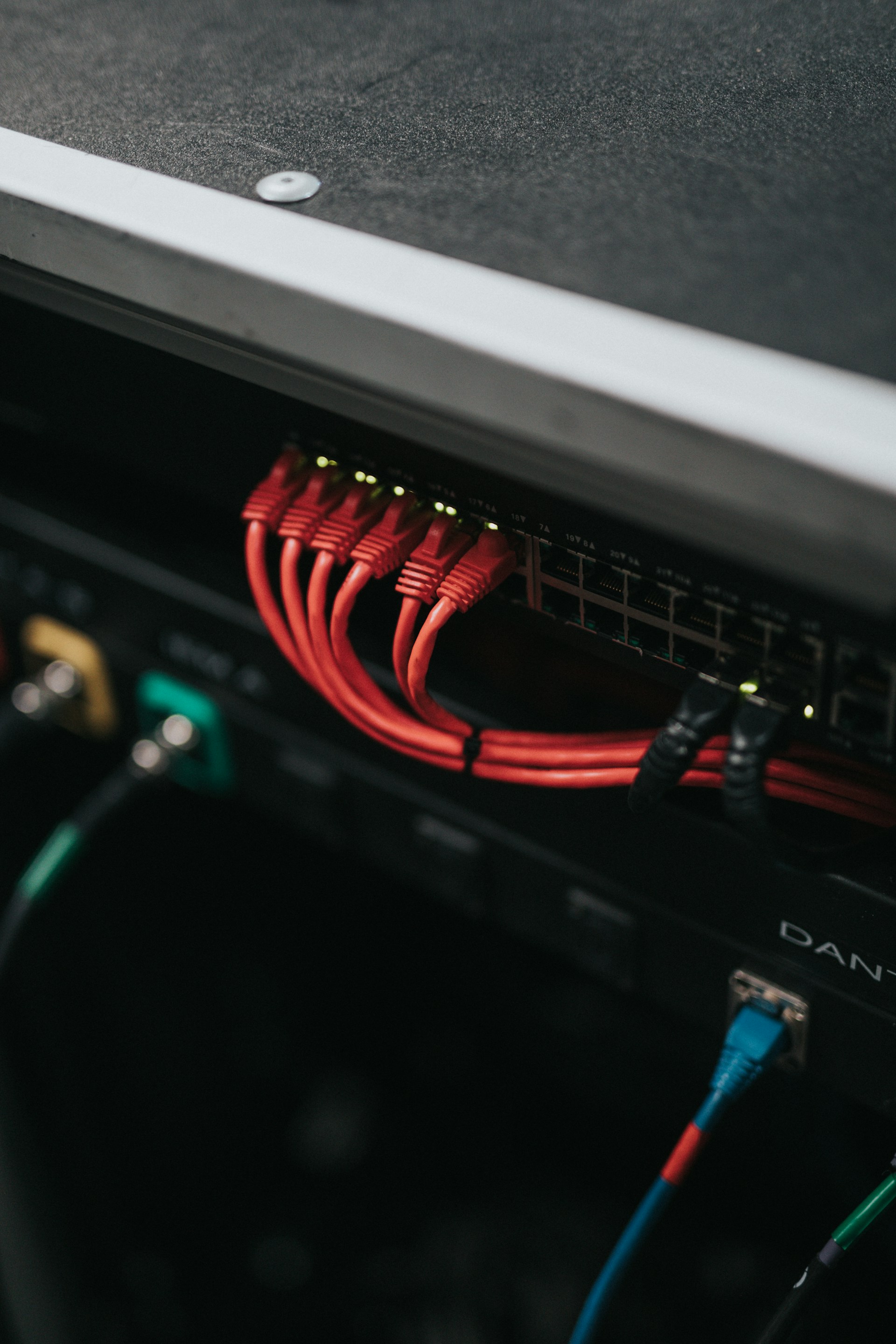
Hotel networks run on switches — the physical hardware that sits in comms rooms and distributes data around the building. Your HP/Aruba switches are responsible for directing traffic intelligently: making sure the right data gets to the right devices.
For group broadcasts to work, there is a feature on these switches called IGMP snooping. In plain language, it's the mechanism that tells the switch which devices have "signed up" to receive a group transmission. Without it, the switch doesn't know who wants the broadcast — and the message either goes nowhere useful, or floods the entire network indiscriminately.
Think of it like a group email list. If the subscription system breaks, either nobody gets the newsletter, or it lands in every inbox in the company. Neither outcome is what you want.
On the HP/Aruba switches at this hotel, IGMP snooping had never been enabled for the Vocera system.
Every badge call worked. Every broadcast went nowhere.
The setting had likely been overlooked during the original deployment — a single checkbox in the switch configuration that is easy to miss if you are not specifically looking for it. Once enabled, the broadcasts worked immediately.
Two months. Dozens of support calls. One unchecked setting.
Why this kind of problem is so hard to find
The reason this went unresolved for so long is not incompetence — it's how fault-finding usually works in hotel IT.
When something breaks, the natural instinct is to look at the thing that broke. The badges aren't working? Check the badges. Test the badge hardware. Restart the Vocera server. Re-check the Wi-Fi signal strength. Call Vocera support.
All of those things were done. All of them came back clear — because all of them were clear.
The problem was not in any of the obvious places. It was in the network infrastructure that underpins everything else: a switch setting that is invisible to badge diagnostics, invisible to Wi-Fi tests, and invisible to Vocera server logs.
Finding it required knowing that Vocera uses two completely different delivery methods for different features — and then testing each one separately to isolate which path was broken.
That's not something most hotel IT teams or even most Vocera engineers think to check. It's a networking problem hiding inside a communications system.
What every hotel running Vocera should verify
If your property uses Vocera badges, these are worth confirming with your network team or supplier:
- Do group broadcasts actually work? Test by initiating a broadcast during a quiet period. If the sending badge hears a chime but recipients hear nothing — multicast is broken.
- Is IGMP snooping enabled on the switches and wireless controller for the Vocera VLAN?
- Is there a dedicated VLAN for the Vocera badges, separate from general data and voice traffic?
- Were the switches specifically configured for Vocera at deployment — or was Vocera added later onto a network that wasn't set up for it?
A badge that makes calls but cannot broadcast is only doing half its job. In a luxury hotel, that half-failure is often invisible until a real incident exposes it — a security response that didn't reach the full team, a housekeeping broadcast that was never heard.
The cost of an undiagnosed problem
Two months without fully working staff communication is not just an inconvenience. It affects:
- Operational efficiency — coordination that should take seconds takes minutes via phone
- Guest experience — slower responses, missed signals, staff unable to quickly reach colleagues
- Staff confidence — when tools don't work, people stop trusting them and revert to slower workarounds
In this case, the fix cost nothing. No new hardware, no new licences. A configuration change on the existing HP/Aruba infrastructure.
The two months it took to find it, however, cost the hotel considerably more.
When was your system last properly audited?
Most hotel communication systems are set up once and then left alone — until something goes wrong. By then, the cost is already being paid.
A proper audit deployment takes a few hours. It checks the network configuration, tests both call types (one-to-one and broadcast), verifies the wireless coverage quality, and confirms that the system is resilient if switches or controllers restart.
If your property runs any Wi-Fi-dependent staff communication system — and you are not certain it has been validated end-to-end, it is worth finding out before you need it most.